
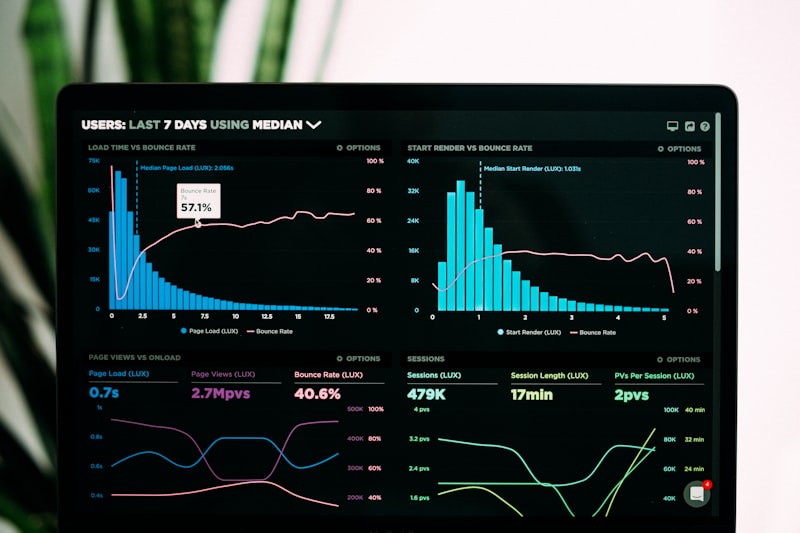
There is a particular kind of confidence that comes from a well-formatted spreadsheet. Rows of polling data, demographic breakdowns, historical voting patterns — it all feels rigorous. It feels like knowledge. And in the slow-moving world of academic research or long-cycle brand strategy, it often is.
But public issues don't move slowly. Campaigns, crises, and community flashpoints move at a speed that renders yesterday's assumptions genuinely dangerous today. In fast-moving environments, the gap between what you believe is true and what is actually true on the ground can swallow an entire strategy whole — and you won't see it coming, because your data told you everything was fine.
The Comfortable Lie of the Aggregate
In Factfulness, Swedish physician and global health educator Hans Rosling spent a career dismantling the assumptions of highly educated, well-resourced people — doctors, politicians, journalists, development economists — about the state of the world. His core finding was not that ignorant people hold wrong beliefs. It was that informed people hold wrong beliefs, confidently, because they built their worldview from aggregates, headlines, and inherited frameworks rather than from granular, updated, ground-level reality.
Rosling called this the "gap instinct" — the human tendency to divide the world into two distinct camps (developed and developing, rich and poor, us and them) and then miss everything happening in the vast, complex middle. Campaigns fall into the same trap. They build a picture of "the voter" — a composite, an average, an assumption — and then run strategy against that fiction rather than the actual people in front of them.
The spreadsheet doesn't lie. But it also doesn't tell you that the intersection where you planned to canvass floods on rainy evenings. It doesn't tell you that the community centre everyone assumes is a hub hasn't been trusted since a funding dispute two years ago. It doesn't tell you that the issue you've ranked third in your issue hierarchy is the one people mention unprompted, every single door.
What Ground Reports Actually Capture
Field data is not the opposite of rigour. It is a different kind of rigour — one that captures texture, sequence, and emotional register that no survey instrument can fully replicate.
When a canvasser speaks with forty residents in an afternoon, they are not just collecting data points. They are observing hesitation. They are hearing what people say after they've answered the official question. They are noticing which concerns travel in clusters, which demographics are more energized than polling suggested, and which framing lands versus which one closes a conversation down. None of that fits neatly into a cell on a worksheet. All of it is strategically significant.
Rosling's solution to the instinct problem was relentless factfulness — the discipline of continuously updating your picture of reality based on new information, resisting the pull of a pre-existing narrative no matter how emotionally satisfying it is. The parallel for campaigns and public affairs is ground reporting: the structured, continuous practice of going to where things are actually happening and asking what you find.
The campaigns that do this consistently — that treat field intelligence not as a nice-to-have but as an operational input — are the ones that move with precision when the environment shifts. They already know the terrain. They've walked it.
"The map is not the territory. It never has been. The map is a model, and models are only as good as the last time someone went outside and checked."
The Speed Problem
There is a second dimension to this that desk research structurally cannot solve: speed.
Public issues accelerate. A planning decision that was quietly simmering becomes the dominant conversation in a ward within seventy-two hours. A piece of infrastructure, a school closure, a zoning change — the issue itself may have existed for months, but the moment it ignites, it moves faster than any syndicated data set can track. By the time the next wave of polling is commissioned, fielded, processed, and interpreted, the window for meaningful response has often closed.
Ground reports operate at a different clock speed. A conversation today reflects today's sentiment. A pattern observed across multiple doors this week is a signal you can act on this week. The intelligence is perishable in the best possible way — it has a short shelf life precisely because it is fresh.
Rosling was fond of pointing out that the world changes faster than our mental models of it. He documented, repeatedly, that people's intuitions about global health, poverty, and education were calibrated to a reality that was decades out of date. The mechanism is simple: we form a view, we stop actively updating it, and then we defend it when challenged rather than revising it. The defence feels like confidence. It is actually intellectual lag.
The same lag afflicts organizations that substitute historical data for current fieldwork. They are not stupid. They are simply operating on a map that no longer matches the territory.
Building the Feedback Loop
The practical answer is not to abandon desk research. It is to subordinate it to field intelligence — to treat the aggregate data as a hypothesis and the ground report as the test.
Rosling's method was to ask, relentlessly: what would I need to see to change my mind? That is the question every strategist should bring to their assumptions before a campaign moves into execution. If the answer is "nothing, because we're confident in our research," the organization is already in trouble. If the answer is a specific set of field observations, you now have the design brief for your ground intelligence programme.
Campaigns that invest in field data — structured canvassing, resident conversations, community listening sessions, real-time synthesis of what doors are saying — consistently outperform those that don't, not because they work harder but because they course-correct faster. They catch the misalignment between strategy and reality before it costs them.
The map is not the territory. It never has been. The map is a model, and models are only as good as the last time someone went outside and checked.
Go outside. Check.
At Sapientia, we build communications strategies on the intelligence that actually exists — not the intelligence that's convenient. Ground reports aren't a supplement to our work. They're where it starts.